













































If you’re a CIO or a business owner in 2026, you know that the "old way" of doing things is no longer just slow: it’s expensive. For years, enterprises relied on MPLS (Multiprotocol Label Switching) to keep their offices connected. It was the gold standard for a long time, but it was rigid, pricey, and never really built for a world where your most important applications live in the cloud.
Fast forward to today. Your team is likely split between the office, home, and coffee shops. Your data is spread across AWS, Azure, and private data centers. In this environment, a traditional network acts like a bottleneck, dragging down productivity and inflating your IT budget.
This is where SDWAN Technology (Software-Defined Wide Area Network) changes the game. It’s not just a technical upgrade; it’s a strategic business move that aligns your network with your growth goals.
What Exactly is SDWAN in 2026?
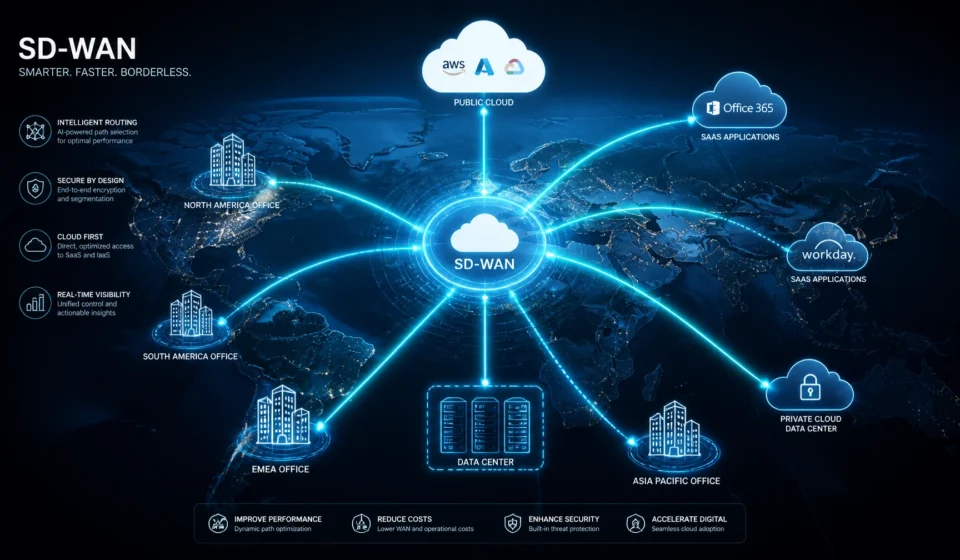
In simple terms, SDWAN takes the "brains" out of your hardware routers and puts them into software. Instead of manually configuring every device at every branch office, you can manage your entire network from a single screen.
But it’s more than just remote management. Modern SDWAN is smart. It looks at the traffic on your network and decides the best path for it. Is someone on an important Zoom call? SDWAN sends that traffic over a high-priority link. Is someone downloading a massive file that isn’t urgent? SDWAN shunts that to a cheaper broadband connection. It’s like having a traffic cop that can see five miles ahead and clear the way for the most important vehicles.
Why the C-Suite is Betting on SDWAN

1. Slashing Costs (The ROI Factor)
The most immediate benefit of SDWAN is the impact on your bottom line. By reducing your reliance on expensive MPLS circuits and utilizing a mix of standard broadband, 5G, and dedicated internet, businesses are seeing cost reductions of up to 60%. You get more bandwidth for a fraction of the price.
2. Cloud Infrastructure Optimization
In 2026, every company is a "cloud company." If your network still backhauls all traffic to a central data center before it reaches the cloud, you’re creating unnecessary latency. SDWAN enables Cloud infrastructure optimization by allowing "local internet breakout." This means your branch office in Mumbai or Dubai can connect directly to Microsoft 365 or Salesforce without taking a detour through your head office.
3. Agility: Moving at the Speed of Business
Remember when opening a new branch took months because you had to wait for a service provider to install a dedicated line? With SDWAN and "Zero-Touch Provisioning," you can ship a device to a new site, have a local staff member plug it in, and be up and running in hours.
Security is No Longer an Afterthought: Enter the NextGen Firewall
One of the biggest concerns with moving away from private MPLS lines is security. If your traffic is going over the public internet, how do you keep it safe?
This is where the integration of a NextGen Firewall to protect business assets becomes vital. Modern SDWAN isn't just about routing; it’s about "Secure Access Service Edge" or SASE (pronounced "sassy").

By combining SDWAN with a NextGen Firewall, you create a unified security layer. You can enforce the same security policies across every office, remote worker, and cloud instance. Whether it’s deep packet inspection, intrusion prevention, or zero-trust access, your network becomes your first line of defense.
The Missing Link: Why a Network Audit is Your Starting Line
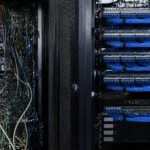
Many organizations jump into SDWAN thinking it’s a "plug-and-play" miracle. But if your underlying infrastructure is messy: think tangled cables, outdated firmware, or undocumented "shadow IT": then SDWAN will only help you manage a mess faster.
This is why we always recommend starting with professional Network audit services.

An audit identifies the bottlenecks, security gaps, and redundant costs that you might not even know exist. It’s the roadmap for your transformation. We look at everything from your routing logic to your physical cabling. Because, as we like to say, even the smartest software can't fix a broken cable.
Beyond the Virtual: The Physical Health of Your Data Center
While SDWAN handles the data flow, what about the physical hardware it runs on? A common mistake we see CIOs make is focusing entirely on the software while ignoring the environment where their servers live.
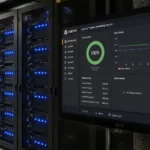
If you don't have AKCP solutions in your data center, you are taking a massive risk. AKCP sensors monitor everything from temperature and humidity to power usage and battery health.
Why should you purchase AKCP before any other IT device?
- Infrastructure Life: It prevents overheating that kills expensive servers.
- Electricity Savings: By monitoring PUE (Power Usage Effectiveness), AKCP helps you optimize cooling and save significant amounts on electricity.
- Risk Mitigation: If your UPS battery fails and you don't have AKCP battery monitoring, your "smart network" goes dark instantly.
Whether it’s an AKCP Solar solution for a green data center or simple thermal optimization, the physical layer is the foundation of your uptime.

Real-World Scenario: The 20-Branch Transformation
Imagine a mid-sized insurance firm with 20 branches across India and the UAE. They were spending $15,000 a month on MPLS lines that were constantly reaching capacity. Their "NextGen" applications were lagging, and their IT head was drowning in support tickets.
The Solution:
- Network Audit: We identified that 30% of their bandwidth was being used by non-critical background updates.
- SDWAN Deployment: We replaced 15 of their MPLS lines with high-speed broadband and 5G backups.
- Security Integration: We deployed a NextGen Firewall at each edge point, managed centrally.
- AKCP Monitoring: We installed AKCP sensors in their main server room to ensure 100% uptime.
The Result:
Their monthly connectivity costs dropped to $6,000 (a 60% saving). Application performance for their agents improved by 40%. Most importantly, the CIO stopped getting "network is slow" calls at 3:00 AM.
Is Your Business Ready for 2026?
The transition to SDWAN isn't just about technology: it’s about giving your business the agility to compete in a cloud-first world. From Cloud infrastructure optimization to ensuring your physical data center is protected by AKCP, the goal is a resilient, cost-effective, and secure foundation.
Are you planning your next technology move or looking to optimize your current infrastructure? Whether you need a deep-dive Network Audit, guidance on PCI, RBI, or UAE Central Bank compliance, or help picking the right AKCP solution, I am here to help you navigate the complexity.
Nicholas Barrowclough
#ServerRoom #datacenter #serverroom #monitoring #uptime #modbus #remotemanagement #datacenterPUE #datacenteroperations #datacenterhealth #ThermalOptimization #uptime #SDWAN #NetworkSecurity #CIO2026 #ITInfrastructure
