


































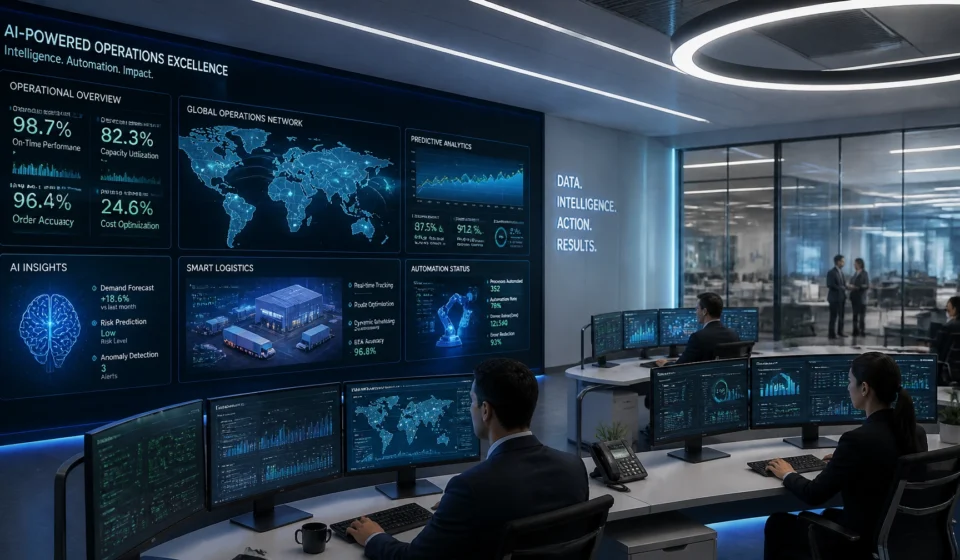

For decades, running an organization efficiently meant streamlining spreadsheets, tightening budgets, and holding endless alignment meetings. But in today’s hyper-connected, fast-paced business environment, traditional operational management simply cannot keep up with the volume of data, volatility in supply chains, and rising customer expectations.
Enter AI-based operations excellence.
For COOs, Operations Heads, CIOs, CEOs, and Business Owners, artificial intelligence is no longer just a futuristic experiment or a nice-to-have IT upgrade. It is the core engine driving competitive advantage, slashing operational expenditures by 30% to 40%, and transforming reactive firefighting into proactive, intelligent execution.
Whether you are looking to revamp your supply chain, automate sluggish workflows, or optimize your underlying IT infrastructure through advanced AI consulting services, understanding how to operationalize AI is the key to running your business smarter, not harder.
1. How AI Drives Operational Excellence Across Industries
Operational excellence has always rested on a simple premise: maximize value while minimizing waste. Historically, achieving this required painstaking manual tracking, rigid Six Sigma projects, and periodic audits.
AI shifts this paradigm entirely. By ingesting vast streams of enterprise data: from ERP systems, CRM platforms, IoT sensors, and customer service logs: machine learning models identify hidden bottlenecks, inefficiencies, and anomalies in real time.
Across manufacturing, logistics, retail, finance, and corporate services, AI acts as a 24/7 digital co-pilot for leadership teams. Instead of waiting for monthly reports to discover that a product line underperformed or shipping costs spiked, AI pinpoints the exact root cause the moment it occurs and suggests or automates corrective action.
[ Data Sources: ERP, IoT, CRM, Logs ]
         │
         ▼
[ AI & Machine Learning Engine ] ──► [ Real-Time Insights & Automated Workflows ]
         │
         ▼
[ Measurable Outcome: 30-40% Cost Reduction & Peak Efficiency ]
2. AI-Powered Process Automation, Predictive Maintenance, and Intelligent Workflows
One of the quickest ways to achieve operations excellence is by eliminating repetitive manual friction. Traditional robotic process automation (RPA) was a step in the right direction, but it was brittle: breaking the moment a form layout changed or a data field shifted.
Modern AI-powered process automation combines traditional automation with cognitive intelligence, computer vision, and natural language processing (NLP). This allows organizations to:
- Automate complex document processing: Instantly read, extract, and reconcile invoices, purchase orders, compliance certificates, and customs declarations without human intervention.
- Optimize customer service workflows: Deploy intelligent agents that resolve up to 80% of routine inquiries instantly while intelligently routing complex edge cases to senior staff.

Beyond administrative workflows, AI transforms physical and digital operations through predictive maintenance. In manufacturing and logistics, waiting for equipment to break down results in catastrophic downtime and lost revenue. Predictive maintenance algorithms monitor vibration, temperature, and wear-and-tear metrics from IoT sensors, predicting equipment failures weeks before they happen.
Studies show that predictive maintenance cuts unplanned equipment downtime by 30% to 50% and reduces overall maintenance costs by up to 30%.
3. AI for Supply Chain Optimization, Inventory Management, and Resource Allocation
Supply chain volatility has become the new normal. From sudden geopolitical shifts to erratic consumer demand, leaders need resilience built into every link of their supply chain.
AI revolutionizes supply chain and inventory management by moving from static forecasts to dynamic, demand-sensing models.
- Demand Forecasting: Machine learning algorithms evaluate hundreds of external variables: including weather patterns, macroeconomic indicators, social media trends, and historical sales: to predict product demand with unprecedented accuracy.
- Inventory Optimization: By accurately forecasting demand and lead times, AI helps businesses right-size their safety stock, slashing inventory carrying costs by up to 35% while virtually eliminating stockouts.
- Intelligent Resource Allocation: AI dynamically matches workforce schedules, fleet routing, and warehouse picking paths in real time, ensuring that personnel and physical assets are deployed where they deliver the highest ROI.
4. Slashing Operational Costs by 30–40% with AI
Every business leader is under pressure to do more with less. When deployed strategically across operations, AI is one of the most potent cost-reduction levers available today.
| Operational Area | Traditional Approach | AI-Driven Approach | Typical Cost Impact |
|---|---|---|---|
| Maintenance & Assets | Calendar-based / Reactive repairs | Predictive sensor-driven upkeep | 25–30% lower maintenance costs |
| Supply Chain & Inventory | Historical averages & safety buffers | Real-time demand sensing & optimization | 15–25% reduction in holding costs |
| Customer Support & Ops | Large manual support centers | Cognitive automation & intelligent routing | 30–50% reduction in service costs |
| IT & Infrastructure | Manual monitoring & ticket resolution | AIOps & automated self-healing systems | Up to 40% reduction in downtime costs |
By eliminating waste, reducing scrap, optimizing labor hours, and preventing costly downtime, organizations routinely achieve a 30% to 40% reduction in operational friction and expenses within the first 12 to 18 months of disciplined AI deployment.
5. Connecting Operations Excellence to AIOps and Data Center Monitoring
Operations excellence is not confined to the factory floor or the supply chain warehouse; it applies equally to your enterprise digital infrastructure. If your core servers go down, your business grinds to a halt.

This is where AIOps (Artificial Intelligence for IT Operations) and advanced infrastructure monitoring intersect with executive operations strategy:
- Proactive IT Health: Just as AI predicts mechanical failure in a logistics truck, AIOps platforms monitor network traffic, server loads, and application performance to detect anomalies before users notice latency or outages.
- Cloud Infrastructure Optimization: AI continuously analyzes cloud resource utilization (AWS, Azure, GCP), automatically rightsizing instances, terminating orphaned resources, and optimizing multi-cloud spending.
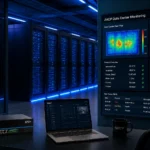
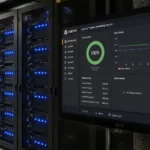
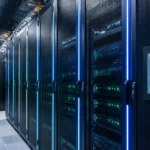
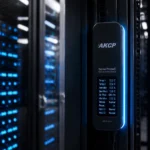
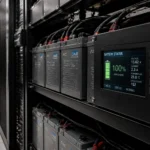
- Critical Facility Protection: Modern operations excellence demands physical and environmental visibility inside server rooms and data centers. Integrating intelligent environmental sensors (such as AKCP monitoring solutions for temperature, humidity, airflow, and power) with AI-driven analytics ensures your hardware remains protected against thermal shutdowns and electrical anomalies.
Effective cloud infrastructure optimization ensures that your IT foundation scales seamlessly as your business grows, keeping operational overhead lean and resilient.
6. The Roadmap: How to Get Started
Implementing AI-based operations excellence does not mean overhauling your entire enterprise overnight. Successful leaders follow a structured roadmap:
- Identify High-Impact Bottlenecks: Pinpoint the operational workflows or supply chain nodes that currently consume the most manual hours or generate the highest error rates.
- Audit Your Data Readiness: AI requires clean, accessible data. Ensure your ERP, CRM, and operational logs are integrated and structured for machine learning ingestion.
- Partner with Experts: Navigating the intersection of AI strategy, process automation, and cloud infrastructure optimization requires specialized knowledge. Working with experienced AI consulting services accelerates your time-to-value and helps you avoid costly architectural missteps.

Take the Next Step in Your Operational Journey
Transforming your organization into an AI-driven, highly optimized powerhouse requires clear vision and expert guidance. Whether you are planning your next digital transformation milestone, looking to optimize your cloud and data center infrastructure, or seeking executive career and technology advisory, we are here to help.
