




































If you are a CIO, CTO, or IT Head managing enterprise infrastructure today, you already know the sinking feeling of waking up to hundreds of critical alerts cascading through your ticketing system at 3:00 AM. In 2026, the sheer volume of data generated by multi-cloud environments, containerized microservices, edge devices, and hybrid data centers has entirely outstripped human capacity to monitor manually.
Traditional monitoring tools: which rely on static thresholds and reactive alerts: are no longer enough. They generate noise, lead to severe alert fatigue, and leave teams scrambling to find root causes while business-critical applications suffer downtime.
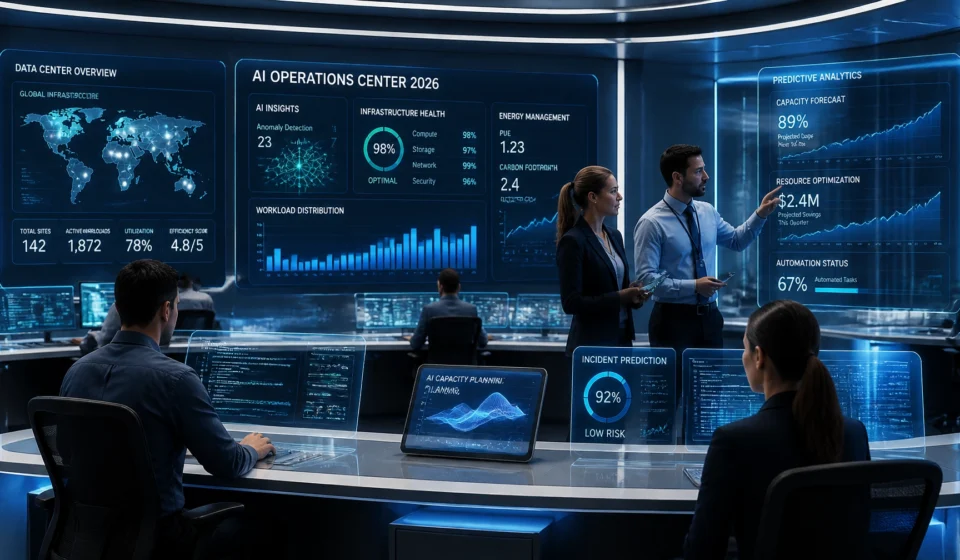
This is where AIOps (Artificial Intelligence for IT Operations) comes in. Moving far beyond simple automation scripts, AIOps has evolved into an autonomous, agentic operational brain that predicts issues, isolates root causes instantly, and in many cases, self-heals infrastructure before users even notice a glitch.
Let's explore how AIOps is reshaping enterprise IT, how it integrates into your DevOps pipelines, why physical hardware monitoring matters, and how your organization can harness these advancements.
1. What Is AIOps and Why Does It Matter for Modern IT Operations?
At its core, AIOps combines big data analytics, machine learning, and automation algorithms to ingest telemetry data from across your entire IT ecosystem: logs, metrics, traces, events, and network packets: and turn it into actionable intelligence.
For business owners and technology leaders, AIOps is no longer an experimental nice-to-have. It is a core pillar of digital resilience. By shifting IT operations from reactive firefighting to predictive orchestration, organizations achieve:
- Drastically lower operational overhead by eliminating manual log trawling.
- Enhanced service uptime through predictive anomaly detection.
- Optimized resource utilization, tying infrastructure spending directly to business outcomes.
Organizations looking to navigate this transition successfully often leverage professional AI consulting services to map out tailored implementation roadmaps, ensuring that machine learning models align directly with business goals rather than creating isolated tech silos.
2. Transforming Incident Management, Monitoring, and Root Cause Analysis

In a traditional incident, your Tier-1 support team spends valuable hours manually piecing together alerts from firewalls, database clusters, load balancers, and cloud storage buckets.
AIOps fundamentally rewrites this workflow through three core capabilities:
Intelligent De-duplication and Alert Correlation
When a core database cluster stutters, it can trigger a cascade of 500 downstream application alerts. AIOps algorithms recognize that these 500 alerts stem from a single upstream anomaly, collapsing them into one single actionable incident ticket.
Automated Root Cause Analysis (RCA)
Instead of asking "What broke?", AIOps platforms analyze historical baselines and real-time execution graphs to pinpoint the exact line of code, configuration drift, or hardware degradation that triggered the failure. What used to take a team 45 minutes of frantic war-room debugging now takes seconds.
Generative AI Incident Summaries
Modern AIOps tools incorporate domain-specific AI assistants that generate natural language incident summaries, post-mortem reports, and recommended remediation steps, empowering junior engineers to resolve complex issues with senior-level guidance.
3. Integrating AIOps with Existing DevOps Pipelines

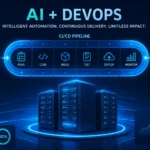
For engineering leaders, the true superpower of AIOps is realized when it is deeply woven into the CI/CD pipeline. A mature DevOps strategy for business treats observability and AI-driven feedback loops as first-class citizens from development to production.
- Pre-Deployment Risk Assessment: Before a new microservice release is pushed to production, AIOps tools analyze telemetry from staging environments to predict whether the new container image will introduce memory leaks or latency spikes.
- Automated Canary Rollbacks: If a canary deployment exhibits subtle behavioral anomalies that bypass standard unit tests, AIOps triggers an automated rollback before customer traffic is impacted.
- Continuous Feedback Loops: Developers receive real-time production performance feedback directly inside their IDEs or Jira boards, bridging the historical divide between Dev and Ops teams.
4. Real-World Impact: Reducing Alert Fatigue and Boosting ROI
The financial and operational metrics speak for themselves. Enterprises that have successfully scaled AIOps report staggering improvements:
- 60% to 95% reduction in alert noise, allowing engineering teams to sleep soundly and focus on innovation.
- 30% to 50% reduction in Mean Time to Resolution (MTTR), directly protecting revenue streams during high-traffic sales events or critical customer interactions.
- Significant gains in cloud infrastructure optimization, where AI continuously rightsizes virtual machines, identifies idle storage volumes, and automates scaling policies to curb runaway cloud bills.
When downtime costs thousands of dollars every minute, the ROI on an AIOps implementation typically materializes within the first 3 to 6 months.
5. Bridging the Digital and Physical: AIOps Meets AKCP Monitoring
While software-level AIOps excels at analyzing application code, container clusters, and cloud traffic, enterprise IT infrastructure lives in the physical world. A software AI cannot help you if a server room overheats due to a failing CRAC unit, or if an uninterruptible power supply (UPS) battery bank degrades silently in the corner of your data center.
This is why holistic infrastructure management requires combining software intelligence with physical data center monitoring solutions.
Why Physical Sensors are Essential for AIOps
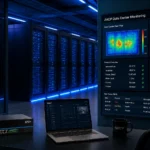
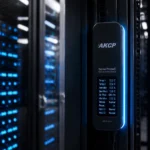
By integrating advanced hardware sensors: such as AKCP environmental monitoring solutions: into your monitoring stack, physical telemetry is fed directly into your operational data lake:
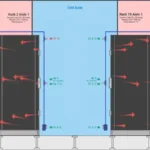
- Thermal Optimization: AKCP intelligent thermal sensors detect hot spots in server racks before CPU throttling occurs, feeding temperature metrics into predictive AI models.
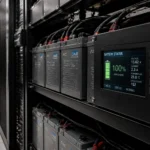
- Battery Monitoring: AKCP battery monitoring sensors track health, voltage, and impedance across backup power systems, preventing catastrophic outages during grid failures.
- Water and Security Monitoring: Real-time leak detection and biometric access logging ensure that physical threats are correlated immediately with digital performance metrics.
By connecting AKCP sensor data to your AIOps platform, you achieve true end-to-end visibility: ensuring your physical data center health is just as automated and intelligent as your cloud microservices.
Conclusion: Take the Next Step in Your IT Evolution
AIOps is no longer a futuristic concept reserved for hyperscalers; it is the definitive operational standard for competitive organizations in 2026. Whether you are looking to eradicate alert fatigue, streamline your DevOps pipelines, or bulletproof your physical data center with intelligent AKCP monitoring, navigating this journey requires expert guidance.
Ready to transform your IT operations, optimize your infrastructure, or plan your next career and technology milestone?
Tags: #AIOps #DevOps #DataCenter #AKCP #CloudOptimization #ITOperations #ArtificialIntelligence #ServerRoom
