



























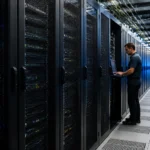






If you are a CIO, CTO, or IT Head walking your data center floor today, ask yourself a simple question: Do you actually know what is happening inside every single rack right now?
Or are you relying on old-school guesses, hoping that the AC units are holding steady, the backup batteries won't fail when the grid flickers, and no rogue hotspot is slowly cooking your core database server?
In 2026, enterprise technology has shifted dramatically. With high-density AI workloads, massive cloud integrations, and strict new regulatory compliance mandates, running a data center without real-time, granular monitoring is no longer just a gamble: it is a financial and operational time bomb.
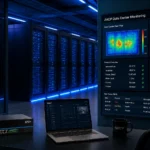
In this article, we’ll explore why data center monitoring solutions have become the single most critical investment for modern businesses, what happens when you skip them, and how industry-leading hardware like AKCP sensor benefits your infrastructure while driving massive data center energy efficiency.
Why Data Center Monitoring is Non-Negotiable in 2026
Data center monitoring isn’t new. For decades, facilities teams tracked basic room temperatures and power inputs. But the game has changed completely.
Modern enterprise workloads: fueled by generative AI, large language models, and high-performance computing: have drastically increased rack power densities. Where a standard rack used to draw 3 to 5 kW, today's AI-ready racks routinely push 20, 30, or even 50+ kW.

At this scale, minor environmental fluctuations are no longer minor. A failing fan, a blocked airflow vent, or a subtle humidity drop can cascade into catastrophic hardware failure within minutes. Furthermore, rising electricity tariffs and stringent global sustainability laws mean that energy waste directly impacts your bottom line and ESG ratings.
Monitoring is no longer a passive reporting tool. It is the active nerve system of your entire digital operation.
The True Cost of NOT Monitoring: What Happens in the Dark?
Many organizations try to save a few dollars upfront by cutting corners on environmental monitoring and sensor deployment. But what happens when you fly blind?
- Catastrophic Equipment Fires & Thermal Damage: Without rack-level thermal tracking, localized hotspots can form undetected. CPUs throttle, motherboards warp, and in worst-case scenarios, thermal runaway triggers catastrophic electrical fires.
- Costly Downtime & SLA Breaches: When a core server shuts down due to overheating or power failure, your business doesn't just lose minutes: it loses customer trust, transaction revenues, and regulatory standing. SLA penalties alone can wipe out annual IT savings.
- Compliance Failures: Modern audits: whether RBI, SEBI, UAE Central Bank, PCI-DSS, or insurance regulatory reviews: increasingly examine environmental controls, battery backup readiness, and audit logs. A lack of monitoring equates to automatic compliance failure.
- Massive Energy Waste: Over-cooling entire rooms "just in case" because you lack precise rack-level visibility burns enormous amounts of electricity. Without granular insights, your cooling energy costs spiral out of control.
Key Metrics You Must Monitor Right Now
If you want absolute control over your infrastructure, your monitoring stack needs to track several vital parameters in real time:
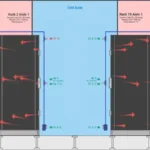
- Temperature & Humidity: Tracked at the front and rear of every single rack (top, middle, and bottom) to catch thermal anomalies instantly.
- Power & Energy Consumption: Inline power meters and intelligent PDUs measuring real-time kilowatt draw and PUE (Power Usage Effectiveness).
- Battery Health & UPS Status: Continuous monitoring of backup battery banks to guarantee generator and UPS readiness during grid instability.
- Airflow & Differential Pressure: Ensuring proper separation between hot and cold aisles without short-circuiting.
- Physical Security & Leak Detection: Water rope sensors under raised floors and biometric/RFID access logs to prevent unauthorized entry or fluid disasters.
How AKCP Provides Comprehensive Data Center Protection
When it comes to enterprise-grade environmental monitoring, AKCP is the gold standard trusted by banks, corporate giants, and mission-critical data centers worldwide.

AKCP sensor solutions deliver end-to-end visibility across your entire infrastructure before, during, and after a crisis:
- Modular Sensor Architecture: From thermal maps and differential pressure sensors to water leak detectors and security alarms, AKCP plugs seamlessly into your environment.
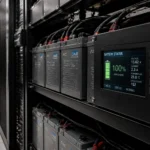
- Intelligent Power & Battery Monitoring: Keep a watchful eye on your UPS and battery banks. AKCP battery monitoring prevents sudden power failures by tracking cell-level voltage, resistance, and temperature.
- Standard Protocols (SNMP & Modbus): Easy integration into existing DCIM, BMS, and AI analytics platforms, giving your team centralized control through a single pane of glass.
- Predictive Alerts: Instant notifications via email, SMS, or SNMP traps long before thresholds cross into dangerous territory.
Battery Monitoring: The Silent Hero of Data Center Uptime
One of the most overlooked components in any data center is the battery backup system. Many IT heads assume their UPS will kick in seamlessly when utility power fails.

However, batteries degrade silently over time due to ambient heat, age, and charge cycles. Without dedicated AKCP battery monitoring, a failing battery string remains hidden until the exact moment the grid fails: resulting in instant, ungraceful shutdowns. Monitoring individual battery health guarantees that your failover systems are always combat-ready.
Cost of NOT Monitoring vs. The ROI of AKCP
Let's look at the math. A comprehensive AKCP deployment requires a modest initial capital investment. Compare that to the financial impact of a single major outage:
- Emergency hardware replacement costs: Thousands of dollars.
- Lost business revenue per hour of downtime: Tens of thousands (or millions for enterprise fintech and banking).
- Regulatory fines and audit penalties: Devastating.
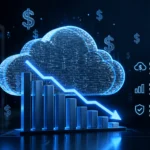
When you factor in the energy savings achieved by raising safe temperature setpoints and eliminating over-cooling: yielding up to 20% to 40% reductions in cooling energy waste: the ROI of AKCP is typically achieved in less than six months.
Secure Your Infrastructure Today
Investing in robust data center monitoring isn't an expense; it is insurance for your entire business ecosystem. Whether you are managing local server rooms or distributed edge sites across the globe, having complete visibility gives your leadership team peace of mind.

Need expert guidance on selecting the right AKCP solutions, planning your data center audit, or scaling your IT infrastructure for global expansion? Connect with our leadership team today.
👉 Click Here to Contact Shelesh for Technical Guidance & Career Planning
#Tags & Industry Keywords
#ServerRoom #datacenter #serverroom #monitoring #uptime #modbus #remotemanagement #datacenterPUE #datacenteroperations #datacenterhealth #ThermalOptimization #uptime Nicholas Barrowclough
