



























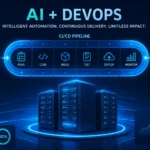
















If 2024 was the year of "What is GenAI?" and 2025 was the year of "Let's build a pilot," then 2026 is officially the year of operationalization.
For the modern CIO, CTO, and Business Owner, the honeymoon phase with Artificial Intelligence is over. The board is no longer asking what AI can do; they are asking what it is doing for the bottom line. We’ve moved past the novelty of chatbots and into the gritty, essential work of integrating AI into the very fabric of enterprise operations: from DevOps pipelines and WAF security to automated RBI compliance and data center thermal management.
In this guide, we’ll break down the practical roadmap for AI implementation in 2026, focusing on business value, infrastructure stability, and the high-stakes regulatory landscape of India, the UAE, and Qatar.
1. Beyond the Pilot: Operationalizing AI for Real ROI
In 2026, "Pilot Purgatory" is a career risk. Most organizations have dozens of AI experiments running, but only a handful are delivering measurable value. The shift this year is toward Agentic AI: autonomous agents that don't just "chat" but actually execute workflows.
To move from hype to reality, CIOs are focusing on:
- Platform Integration: Instead of standalone AI tools, we are seeing AI embedded directly into ERPs, CRMs, and Oracle Databases.
- Agentic Workflows: Using AI to automate complex IT operations (AIOps), such as auto-scaling Cloud instances on AWS, Azure, or GCP based on predictive traffic patterns.
- Measurable Metrics: Shifting focus from "engagement" to hard KPIs like cost reduction, cycle-time improvement in Agile sprints, and 24/7 automated threat detection.

2. The Foundation: Why You Can’t Have AI Without Reliable Infrastructure
You can have the most advanced LLM in the world, but if your data center overheats or your power fails, your AI strategy is worth zero. This is where many CIOs miss the mark: they focus on the "brain" (AI) and forget the "body" (the physical infrastructure).
As an IT Consultant, I always tell my clients: "Do you have AKCP in your Data Center?"
Before you purchase any new IT devices or scale your AI workloads, you must secure your physical layer. AI workloads are incredibly resource-intensive; they run hot and they consume massive amounts of electricity.
Why AKCP is Your AI Strategy's Best Friend:
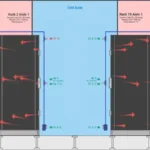
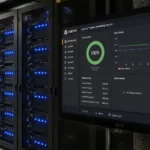
- Preventing Downtime: AKCP sensors provide real-time thermal mapping and hotspot detection. In an AI-driven environment, a single rack failure can disrupt an entire training model.
- Saving Electricity: By using AKCP's Digital Twin and sensorCFD, you can visualize airflow and stop overcooling your room. This can save your organization up to 4-5% in energy costs for every 0.5°C you safely raise the temperature.
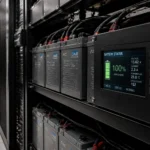
- Battery & Solar Monitoring: For firms moving toward green technology, AKCP’s Solar and Battery monitoring solutions ensure your "AI brain" has a sustainable, uninterrupted power supply.

3. Navigating the 2026 Regulatory Landscape (RBI, UAE, Qatar)
Compliance is no longer a "check-the-box" activity for IT heads. In 2026, regulators in India (RBI), the UAE (Central Bank), and Qatar (QCB) have tightened the screws on AI governance and data sovereignty.
Whether you are going through a PCI Audit, an RBI Audit, or an Insurance Regulatory and Development Authority of India (IRDAI) Audit, the requirements are clear: you must have documented AI governance.
Key Compliance Shifts for 2026:
- India (RBI/SEBI): There is a massive focus on AI-accelerated cyber threats. Audits now require proof that your WAF (Web Application Firewall) and Network Security are equipped to handle AI-driven phishing and automated attacks.
- UAE (Central Bank): New February 2026 guidance mandates "Security-by-Design" for all AI systems and grants the regulator third-party audit rights over your AI vendors.
- Qatar (QCB): The shift is from "point-in-time" validation to continuous monitoring. If your AI model is drifting or showing bias, you need an automated system to catch it before the auditor does.

4. The ROI of "Safe" Innovation
Implementing AI without a proper Network Audit or Data Center Audit is like building a skyscraper on sand. CIOs who succeed in 2026 are those who balance innovation with risk management.
By integrating Agile methodologies into AI deployment, teams can move faster, but only if the underlying DevOps structure is secure. This includes:
- Cloud Cost Optimization: Using AI to audit your own cloud spend on Azure or Oracle.
- Structured Cabling: It sounds basic, but many "AI failures" are actually physical connectivity failures. Never underestimate the importance of structured cabling for high-speed data throughput.
- AI Academies: Reskilling your current team is cheaper than hiring new talent. Building a role-based AI Academy ensures your staff knows how to use these tools ethically and effectively.

5. Conclusion: Your 2026 AI Action Plan
The hype is over. The work has begun. As a CIO or Business Owner, your job in 2026 is to ensure that AI is:
- Grounded in Reality: Secured by robust physical infrastructure (AKCP).
- Compliant by Design: Ready for any RBI, UAE, or Qatar audit.
- Driven by Value: Focused on ROI, not just "cool" tech.
If you are planning your next technical move, looking to optimize your data center, or navigating a complex regulatory audit, don't do it alone. Whether you're a Founder in India or a CTO looking for growth in the Gulf countries, expert guidance can save you years of technical debt and millions in potential downtime.
Get expert advice on latest technology, career growth, or job planning for Gulf countries directly from Shelesh Chauhan (CIO).
