





































Battery Monitoring: Why ItS the Most Overlooked (and Most Critical) Part of Your Data Center

Picture this: You’ve invested millions in state-of-the-art server hardware, high-performance NVMe storage arrays, redundant core switches, and enterprise-grade multi-cloud connections. Your facility is a fortress of uptime. Then, a sudden grid failure strikes. Your UPS system clicks on, but within seconds, the entire infrastructure drops. Chaos ensues.
What went wrong? The servers were fine. The generators were spinning up. But the UPS battery bank: the absolute last line of defense: failed silently under load because a single compromised battery cell went undetected.
For CIOs, CTOs, IT Heads, and Data Center Managers, this is the nightmare scenario. In modern mission-critical facilities, battery monitoring is frequently treated as an afterthought until disaster hits. In this guide, we explore why real-time battery intelligence is the beating heart of data center resilience, how advanced hardware like AKCP sensor benefits your operations, and why proactive data center monitoring solutions are mandatory for regulatory compliance.
The Hidden Vulnerability: Why UPS Batteries Fail Without Warning
Uninterruptible Power Supplies (UPS) are only as reliable as their chemical energy storage. Traditional facility management often relies on manual quarterly or bi-annual multimeter checks. Between those inspections, battery strings degrade invisibly due to ambient temperature fluctuations, sulfation, internal resistance buildup, or manufacturing defects in individual cells.

When grid power cuts out, weak cells cannot sustain the discharge current. Voltage drops precipitously, dragging down the entire string and shutting down connected IT loads before backup generators can bridge the gap.
Key Risks of Unmonitored Infrastructure:
- Thermal Runaway: Undetected internal shorts cause localized heating, melting battery casings, releasing toxic gases, and creating severe fire hazards.
- Cascading String Failure: A single failing 12V block in a 480V DC string pulls down the charging and discharging profile of adjacent units.
- Sudden Uptime Collapse: Zero visibility into actual remaining run-time during load transitions.
AKCP Battery Monitoring Solutions: Granular Visibility at the Cell Level
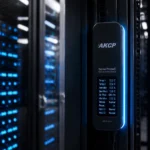
To eliminate blind spots, enterprise data centers rely on dedicated environmental and power monitoring systems. AKCP: the global leader in sensor technology: provides comprehensive AKCP battery monitoring solutions designed to catch anomalies before they threaten business continuity.
What Does an AKCP Battery Health Sensor Track?
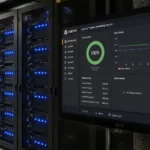
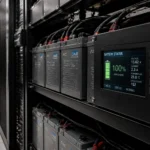
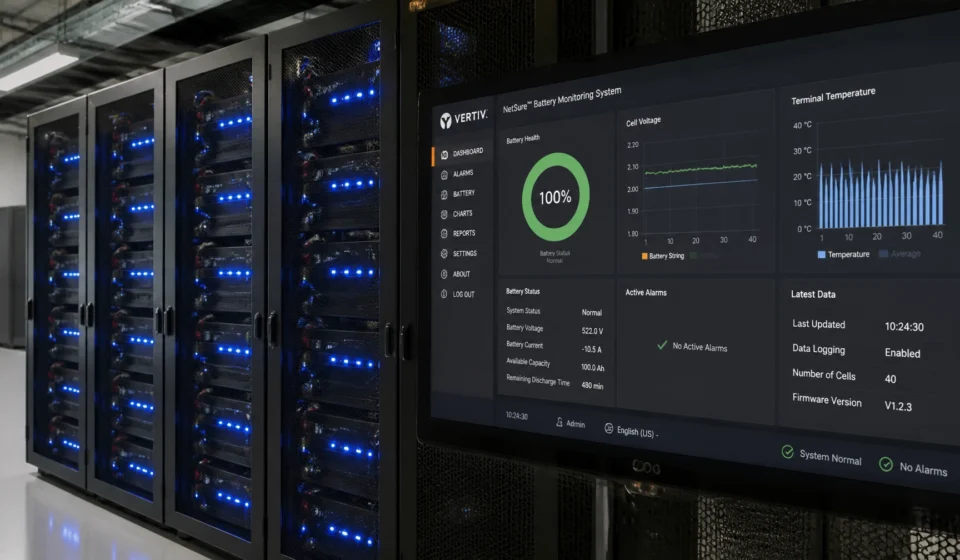
Using intelligent sensors like the AKCP BATTMON, operations teams gain 24/7 visibility into three critical electrical parameters:
- Cell Voltage (0–60V DC): Measures individual cell or string voltage with extreme precision (±0.05% full scale). Detects overcharging, undercharging, or failing cells instantly.
- Charge and Discharge Current: Integrated via external Current Transformers (CTs) ranging from 50A to over 1000A, tracking exact load dynamics during power events.
- Battery Terminal Temperature: Placed directly on the negative post or terminals to monitor thermal shifts. A temperature spike of just a few degrees above ambient is often the earliest warning sign of internal resistance and imminent failure.

By combining these metrics into centralized data center monitoring solutions, your engineering team receives instant SNMP traps, SMS alerts, or email notifications the moment any parameter drifts outside normal operating thresholds.
Maximizing ROI: How Battery Monitoring Extends Lifespan & Cuts Costs
Replacing industrial UPS battery banks is a massive capital expenditure. Left unmonitored, harsh operating conditions and improper float voltages can degrade batteries in just 3 to 4 years, forcing premature replacements.
Implementing automated battery monitoring fundamentally changes this financial equation:
- Extending Battery Life to 6–8+ Years: By maintaining optimal charge parameters and catching thermal stress early, you maximize the lifespan of your chemical assets.
- Preventing Truck Rolls & Manual Labor: Automated logging eliminates the need for expensive, manual spot-checks by third-party technicians.
- Boosting Data Center Energy Efficiency: Healthy batteries require less parasitic energy during float charging, directly contributing to lower Power Usage Effectiveness (PUE) metrics and enhanced data center energy efficiency.
Regulatory Compliance: The Digital Audit Trail Imperative
For banking, financial services, and enterprise corporations operating in heavily regulated jurisdictions, manual paper logs are a thing of the past. Regulatory bodies across the globe now demand rigorous, verifiable digital record-keeping for critical power infrastructure.

Auditors from institutions such as:
- RBI (Reserve Bank of India) and SEBI for Indian financial institutions,
- UAE Central Bank and regional GCC regulators,
- IRDAI and insurance sector authorities,
strictly audit power backup resilience and environmental logs. Automated AKCP systems generate time-stamped, tamper-evident digital logs of battery voltage, temperature, and discharge cycles, ensuring your facility breezes through PCI audits, network audits, and IT security compliance checks without friction.
Secure Your Infrastructure Today
Data center resilience is not built on hope; it is built on continuous, intelligent telemetry. Whether you are scaling up a regional colocation facility or safeguarding corporate core servers, integrating AKCP battery monitoring is the smartest investment you can make before deploying new IT hardware.
Want guidance on architecting your data center monitoring strategy, planning technology investments, or exploring career growth and technical deployments in global markets? Connect with our leadership for expert advisory.
Nicholas Barrowclough #ServerRoom #datacenter #serverroom #monitoring #uptime #modbus #remotemanagement #datacenterPUE #datacenteroperations #datacenterhealth #ThermalOptimization #uptime
