






















Let’s be real: If you’re a CIO or Head of IT in the UAE right now, the phrase "Central Bank Audit" probably gives you a slight tension headache.
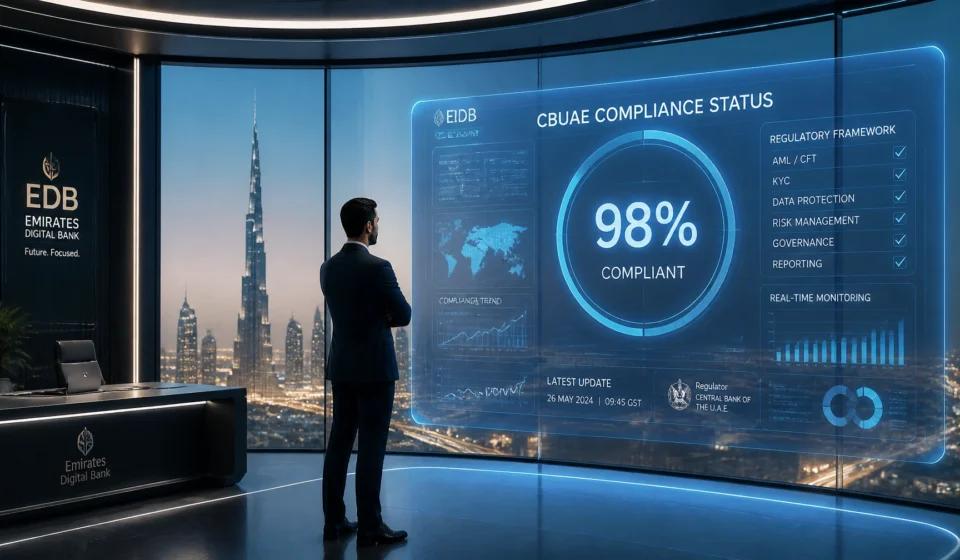
In 2026, the stakes have never been higher. The Central Bank of the UAE (CBUAE) has ramped up its Information Security Regulations (ISR) and Cybersecurity Framework (CSF). They aren’t just looking for "good enough" anymore; they are looking for absolute, verifiable resilience. Between the new AI governance mandates and the constant pressure of digital transformation, it’s easy to feel like you’re trying to build a plane while it’s flying: through a sandstorm.
But here’s the good news: Audit-proofing your bank doesn’t have to be a nightmare. It’s about strategy, the right tools, and knowing where the auditors are going to look before they even walk through the door.
At IT Consultant, we’ve helped leaders across the region navigate these waters. Here is your survival guide to staying ahead of the curve and turning that next audit into a victory lap.
1. The 2026 CBUAE Framework: What’s Mandatory Now?
The CBUAE doesn't play around when it comes to the Cybersecurity Framework. It’s based on heavyweights like ISO 27001 and NIST, covering nine specific domains. If you haven't reviewed your alignment in the last six months, you're already behind.
The Non-Negotiables:
- MFA Everywhere: Multi-Factor Authentication is no longer just for remote access. It’s mandatory for all privileged accounts, all customer-facing systems, and every critical application in your stack.
- 24/7 SOC: You need a Security Operations Center that never sleeps. The CBUAE expects real-time monitoring and a 5-year log retention policy. If something happened three years ago and you can't pull the logs, that’s a red flag.
- Remediation SLAs: Auditors are now checking your "Time to Patch." Critical vulnerabilities need to be squashed in 30 days. No excuses.
2. The Physical "Blind Spot": Is Your Data Center Truly Secure?
Whenever I talk to a CIO, they usually have the latest firewalls and cloud security tools. But when I ask, "Do you know the exact temperature at the back of Rack 4 at 3 AM last Tuesday?" I often get a blank stare.
Physical security and environmental monitoring are the first things auditors check because they are the easiest to fail. This is where the AKCP solution comes in.

Why AKCP is the Gold Standard for Banks:
In a banking environment, downtime isn't just an inconvenience; it’s a national security issue. Using AKCP for your Data Center audit prep ensures:
- Thermal Mapping: You get a 3D heat map of your racks. Auditors love seeing that you’ve eliminated hotspots.
- RFID Rack Locks: "Who opened the server cabinet?" With AKCP’s RFID swing-handle locks, you have a digital audit trail of every physical access event. This is a massive win for PCI Audit and CBUAE compliance.
- Leak & Air Quality Detection: From under-floor water leaks to corrosive gases that eat away at your hardware, AKCP sensors catch the invisible killers before they cause a crash.
If you don't have AKCP in your Data Center, you're carrying an unnecessary risk. It doesn't just save your infrastructure; it saves your electricity bill by optimizing cooling (a big plus for your bank's ESG goals).
3. The New Frontier: AI Governance & Security
As of February 2026, the CBUAE has released specific guidance on AI in Banking. We’re all excited about agentic AI and automated workflows, but from an audit perspective, AI is a "black box" that needs light.
Your AI Checklist:
- Data Lineage: Can you prove where the data used to train your models came from?
- Prompt Injection Defense: Are you protecting your LLMs from malicious inputs that could leak customer data?
- Model Ethics: Do you have a documented framework for ensuring your AI isn't making biased lending decisions?
Moving AI from pilot to production requires a "Security-by-Design" approach. If you’re just "plugging it in" to see what happens, you’re setting yourself up for a regulatory world of hurt.

4. Cloud Resilience & The Data Residency Trap
The UAE is a "Cloud-First" region, but for banks, it’s "Cloud-Careful." Any material outsourcing: especially to AWS, Azure, or GCP: requires CBUAE approval.
The big question auditors ask is about Digital Sovereignty. Where does the data live? Is it encrypted with keys that you control, or keys the provider controls? At IT Consultant, we specialize in helping CIOs architect multi-cloud environments that satisfy the strict data residency requirements of the UAE Central Bank and Qatar’s regulatory bodies.
5. Why a "Box-Ticking" Strategy Will Fail You
I’ve seen many IT Heads treat audits like a school exam: cramming at the last minute and ticking boxes. That doesn't work in 2026.
A successful audit strategy is about continuous compliance. This means:
- Network Audits: Regular deep dives to ensure your structured cabling and VLAN segmentation actually match your documentation.
- Risk Assessments: Integrating your IT risk into the bank’s overall operational risk framework.
- Vulnerability Management: Moving from "scanning" to "managing" risk based on business impact.
Your 2026 Audit-Ready Checklist
If you want to sleep better at night, make sure these six areas are covered:
- Infrastructure Health: Do you have AKCP sensors for temperature, humidity, and liquid leaks in every critical room?
- Access Control: Are all your server racks protected with RFID locks and time-stamped audit trails?
- Cyber Hygiene: Is MFA enabled for 100% of privileged and remote accounts?
- AI Governance: Is there a board-approved policy for all AI use cases?
- Data Sovereignty: Can you pinpoint exactly which geo-zone your customer data resides in?
- Resilience: Have you conducted a "Ransomware Tabletop Exercise" in the last 6 months?

Need a Hand? Let's Talk Strategy.
Navigating the technical landscape of the Middle East: from UAE Central Bank audits to the latest AI trends: is what we live for. Whether you are looking to secure your Data Center with AKCP solutions, need a hand with a PCI Audit, or are planning your next big career move in the Gulf, I’m here to help.
I've spent years guiding CIOs and CTOs through these exact challenges. Don't wait for the auditor to find the gaps for you.
About Shelesh Chauhan
Shelesh Chauhan is the CIO and founder of IT Consultant, specializing in high-stakes IT infrastructure, Cybersecurity, and Regulatory Compliance across India and the Middle East. With expertise ranging from Oracle Databases and VMware to AKCP environmental solutions, Shelesh helps organizations build resilient, audit-proof technology stacks.
