








































The Hidden Costs of Bad Cabling: Why Infrastructure is the Foundation of Your Business

Let’s be honest. When you’re pitching a digital transformation strategy to your board, you’re probably talking about the latest Generative AI, Multi-Cloud optimization, or a Zero-Trust security architecture. You’re likely not talking about the plastic-coated copper wires running under the floorboards or behind the server racks.
Cabling is the "unsexy" part of IT. It’s out of sight, and usually out of mind: until it isn’t.
But here is a reality check for every CIO, CTO, and Business Owner: 70% of all network issues are caused by poor cabling practices. Think about that. You can spend millions on the fastest Oracle Databases, the most secure WAF (Web Application Firewalls), and the latest AWS instances, but if your physical layer is a mess, your entire high-tech stack is built on a foundation of sand.
At IT Consultant, we’ve seen it all: from "cable spaghetti" that looks like a technicolor nightmare to pristine, structured environments that hum with efficiency. Today, we’re diving into the hidden costs of bad cabling and why infrastructure isn't just a utility: it’s the backbone of your business continuity.
1. The "Spaghetti Monster" vs. Structured Excellence
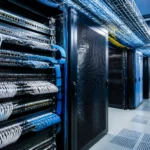
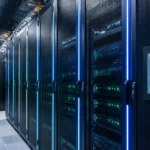
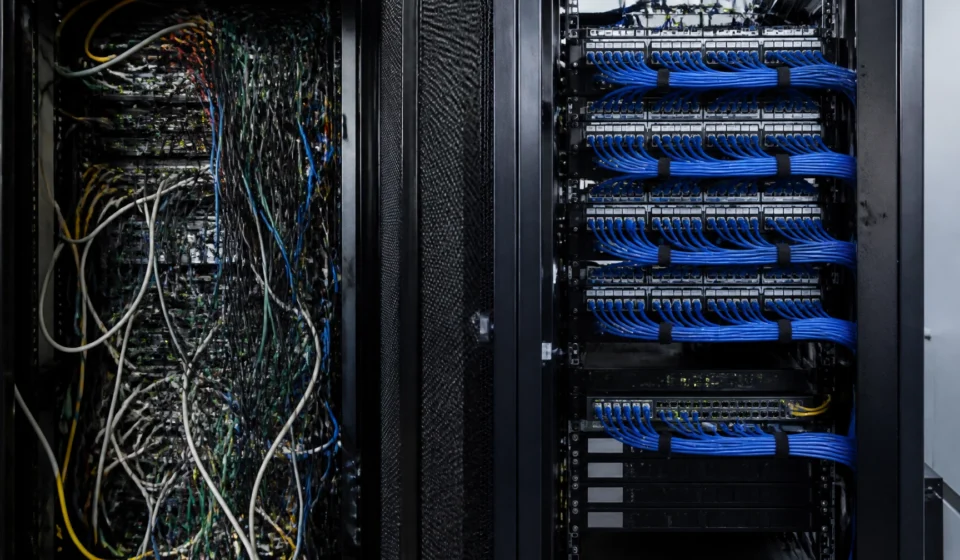
We’ve all seen it: a server room where the racks are overflowing with tangled, unlabeled cables. It looks like a giant bowl of electronic spaghetti. While it might have started as a "quick fix" for one extra server, it quickly evolves into a liability.

The Point-to-Point Trap
Most bad cabling comes from "point-to-point" thinking. You need to connect Device A to Switch B, so you grab a 10-meter patch cord and plug it in. Repeat this 500 times, and you have a mess.
Structured Cabling, on the other hand, is a planned system of patch panels and trunk cables. It’s the difference between building a highway system and just paving a random path through the woods every time someone wants to walk somewhere.
2. The Invisible Financial Drain: Why Bad Cabling Costs You More Than Good Cabling
If you think saving money on a cheap cabling job is helping your budget, you’re actually paying a "chaos tax" every single day. Here are the three main ways bad cabling drains your bank account:
A. The Productivity Tax
Have you ever had an employee complain that "the network is just slow today"? Often, it’s not the internet provider or the server. It’s cross-talk and attenuation caused by poorly routed or low-quality cables.
If 30 employees lose just 30 seconds a day waiting for files to sync or video calls to unfreeze, that adds up to hundreds of lost man-hours per year. It’s an invisible tax on your payroll.
B. The Troubleshooting Nightmare
When the network goes down at 2:00 AM, your IT team needs to find the problem fast. In a structured environment, they can trace a line in seconds. In a "spaghetti" environment, they are literally tugging on wires, hoping they don't accidentally unplug the wrong thing.
According to Fluke Networks, poor cabling can account for up to 50% of all network failures. When your team spends 4 hours fixing something that should take 10 minutes, you aren't just paying for their time: you're paying for the downtime of the entire company.
C. The Hardware Death Warrant
Cables don't just carry data; they also block airflow. A mess of cables in front of a server intake prevents cool air from reaching the processors. This leads to thermal throttling (where your expensive hardware slows down to protect itself) or, worse, premature hardware failure. You might find yourself replacing servers every 3 years instead of 5, simply because they "cooked" inside the rack.
3. Protecting the Physical Life: The AKCP Solution
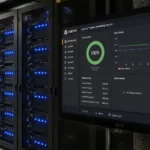
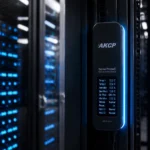
At IT Consultant, we don't just look at the wires; we look at the environment. This is where AKCP solutions become critical for any modern data center.

If you don't have AKCP sensors in your data center, you are flying blind. Why is this a risk?
- Heat & Humidity: Bad cabling traps heat. AKCP sensors tell you exactly where the hotspots are before your hardware fries.
- Electricity Savings: By organizing your cabling and using AKCP to monitor airflow, you can optimize your cooling systems, significantly saving on your organization's electricity bills.
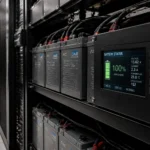
- Battery Monitoring: For CIOs managing UPS systems, AKCP’s battery monitoring ensures that when the power goes out, your backup actually works.
Before you purchase any more IT devices, you should ask: Do I have the infrastructure to protect them?
4. Compliance, Risk, and the "Audit" Reality
If you are in the Fintech, Banking, or Insurance sectors, bad cabling isn't just a performance issue: it’s a compliance failure.
Regulatory bodies like the RBI (India), UAE Central Bank, SEBI, and Qatar regulators have strict standards for data center audits and IT security audits. During a PCI Audit or a Data Center Audit, an inspector isn't just looking at your firewall settings. They are looking at your physical security, your cable labeling, and your risk of fire (a major hazard in messy racks).
Poor structure cabling can lead to:
- Failed Audits: Leading to heavy fines and loss of operating licenses.
- Security Risks: Unlabeled cables make it easy for someone to "tap" into a network or bypass security measures without anyone noticing.
- Risk of Fire: Overloaded cable bundles can actually become a fire hazard.
A professional Network Audit from IT Consultant can save your business by identifying these gaps before the regulators do.
5. The Strategy for CIOs: Infrastructure is the Future
As a CIO or CTO, you are the architect of your company’s future. If you are planning to move to the Cloud (AWS, Azure, GCP) or implement Agentic AI workflows, remember that these systems require massive amounts of data to move flawlessly across your local network.

Your 3-Step Action Plan:
- Stop the Bleeding: Stop allowing "temporary" point-to-point cable runs. Enforce a structured cabling standard for every new device.
- Audit Your Foundation: Schedule a comprehensive IT Infrastructure Audit. This should include a review of your cabling, your AKCP monitoring status, and your compliance with local regulations (like the IRDAI in India or UAE Central Bank guidelines).
- Invest in Monitoring: Don't wait for a fire or a failure. Implement AKCP solar and battery solutions to ensure your infrastructure is green and resilient.
Conclusion: Don't Let the Wires Trip Up Your Success
In the world of high-level IT strategy, it’s easy to overlook the physical layer. But as we’ve seen, bad cabling is a silent killer of productivity, a drain on your budget, and a massive risk to your compliance status.
Structured cabling is the unsung hero of business continuity. It ensures that when you scale, your network scales with you. It ensures that when there’s a problem, it’s fixed in minutes, not hours. And most importantly, it ensures that your business stays online and compliant.
Are you worried about your current data center setup? Planning a career move to the Gulf and need guidance on the latest tech trends? Or do you need a professional audit to ensure you're ready for the next RBI or SEBI inspection?
Reach out to Shelesh Chauhan (CIO) for expert guidance. Whether it’s latest technical knowledge about AI, DevOps, and Cloud, or securing your physical infrastructure with AKCP solutions, we are here to help you lead with confidence.
