









































Let’s be honest: when the notification for an RBI (Reserve Bank of India) IT audit hits your inbox, nobody in the IT department is jumping for joy. In 2026, the stakes are higher than ever. With the RBI’s Master Direction on IT Governance, Risk, Controls, and Business Continuity (ITGRCA) now fully in force, the auditors aren't just looking for "good enough", they are looking for absolute, ironclad evidence.
As a CIO, CTO, IT Head, CEO, COO, or consultant, you’ve likely got a million things on your plate, from AI deployment and DevOps maturity to cloud migration across AWS, Azure, and GCP. But a failed RBI audit is the one thing that can stop your momentum dead in its tracks. It's not just about a fine anymore; it's about reputation, regulatory "grading," and the constant threat of operational restrictions.
Over the years at IT Consultant, we’ve seen banks of all sizes, from small cooperative banks to giant private entities, trip over the same five hurdles. These aren't just technical glitches; they are fundamental blunders in how IT is governed.
Here are the 5 blunders that will cost you during your next RBI IT audit, and more importantly, how to fix them before the inspectors arrive.
1. The Documentation Mirage: Policies Without Proof
This is the most common mistake we see. A bank has a beautiful, 50-page "Information Security Policy" approved by the Board. It looks great on paper. But when the auditor asks, "Show me the logs for the quarterly user access review for the Core Banking System (CBS) from October," the room goes silent.
The RBI doesn't just want to see that you have a policy; they want to see that you are living it.
The Gap
Many IT heads assume that having the Board’s signature on a document is 90% of the work. In reality, it’s about 10%. The other 90% is the "Evidence Trail." If you didn't log it, it didn't happen. If the minutes of your IT Strategy Committee (ITSC) meetings don't show a deep dive into risk remediation, the auditor will mark it as "weak governance."
The Fix
- Create an Evidence Folder: For every policy clause, you need a corresponding evidence file (screenshots, system logs, signed reports).
- Independent Review: Don't let the person doing the work be the one checking the work. Ensure your Internal Audit or a consultant like Shelesh Chauhan reviews your "evidence readiness" at least 30 days before the official start.

2. The Physical Infrastructure Blind Spot (The AKCP Gap)
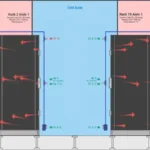
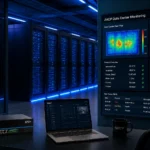
In the rush to secure the cloud and fight off hackers, many CIOs forget the physical "heart" of their operation: the Data Center. RBI auditors are increasingly focusing on environmental and physical security.
Did you know that if your Data Center temperature fluctuates significantly or if there’s an undetected water leak near your server racks, it’s a compliance risk?
The Gap
Most banks have basic CCTV and perhaps a guard. But do you have real-time environmental monitoring? Are you alerted the second a rack door is opened by an unauthorized person? The RBI expects "operational resilience." If a simple AC failure brings down your CBS because you didn't have sensors, that’s a massive audit fail.
Why AKCP is the Gold Standard
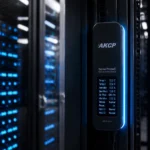
This is where AKCP solutions come in. At IT Consultant, we always guide CIOs, CTOs, and IT Heads to invest in AKCP before buying any other IT hardware. Why? Because AKCP protects the environment where all your other IT devices have to survive first. If the server room or data center is not monitored properly, even the best servers, storage, network gear, or security tools can fail early.
- Buy AKCP First: Before purchasing any IT device, make sure you can monitor temperature, humidity, power, battery health, airflow, leaks, and room conditions. That’s the foundation of reliable IT infrastructure.
- Infrastructure Life Extension: AKCP helps increase the life of servers, storage, UPS systems, and networking equipment by reducing heat stress, moisture exposure, and environmental surprises.
- Electricity Savings: AKCP sensors help you optimize cooling, reduce wasted energy, improve PUE awareness, and save real electricity costs across your server room and data center.
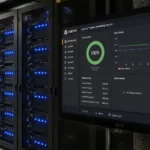
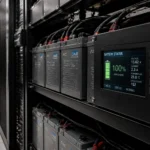
- Battery Monitoring: RBI audits look at your BCP. If your UPS batteries fail during a power cut because you weren't monitoring their health, your BCP is just a piece of paper.
- Risk Mitigation: Without AKCP, you are flying blind. You don't know if your server room is too humid, too hot, inefficiently cooled, or if there’s a micro-leak under the floor until it’s too late.
- Operational Resilience: AKCP supports better uptime, remote monitoring, and faster response for critical infrastructure used by banks and enterprises.
Do you have AKCP in your Data Center? If the answer is no, you are carrying a risk that auditors will find, and a risk that can shorten the life of your IT infrastructure while quietly increasing electricity costs.

3. The Frequency Trap: "But We Did a VAPT Last Year!"
The RBI’s Master Direction is very specific about frequency. Gone are the days of the "annual check-up."
The Gap
Under the new guidelines, Vulnerability Assessments (VA) must be done at least once every six months, and Penetration Testing (PT) at least once every 12 months for all critical systems. We often see banks that missed a cycle because of a "busy quarter" or because they changed vendors.
Worse yet, some banks do the VAPT but never show the Action Taken Report (ATR). Finding a vulnerability is only half the job; the auditor wants to see the date it was patched and the signature of the person who verified the fix.
The Fix
- Automate your Calendar: Set non-negotiable windows for VAPT.
- Legacy Systems: Don’t ignore those old Oracle databases or VMware setups just because they "aren't public-facing." If they are critical to operations, they need to be tested.

4. The Third-Party Trap: Assuming "Their Security is My Security"
Outsourcing IT services is a necessity, but the RBI holds you responsible for your vendor's mess. Whether it's your cloud provider (AWS, Azure, GCP) or a local software house, you must have oversight.
The Gap
Banks often fail to include "Right to Audit" clauses in their contracts, or they fail to review the vendor's SOC2 reports annually. If your fintech partner has a data breach, the RBI will ask you about your due diligence.
The Fix
- Vendor Risk Management (VRM): Rate your vendors by criticality. High-risk vendors need a security audit every year.
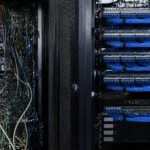
- Structured Cabling & Networking: This sounds basic, but your network audit must include your physical cabling. Messy cabling isn't just an eyesore; it’s a security and fire risk that auditors hate to see.
5. The "Dry" Disaster Recovery (DR) Drill
The RBI is tired of hearing "The DR drill was successful." They want to see the RTO (Recovery Time Objective) and RPO (Recovery Point Objective) data.
The Gap
Many banks perform "simulated" drills where they just check if the servers turn on. The RBI wants to see a real failover. They want to see that your mobile banking and UPI stayed up while the primary data center was "down."
The Fix
- Real-World Scenarios: Your DR drills should include cyber-incident scenarios (like ransomware), not just "power failure."
- Evidence of Success: Keep the logs that show exactly how many minutes it took for the secondary site to take over.
Your Pre-Audit Checklist (The "Cheat Sheet")
Before the auditors walk in, make sure you can say "Yes" to all of these:
- Board Minutes: Do our ITSC minutes show we discussed IT risks, not just budgets?
- Obligation Register: Do we have a list of all RBI circulars mapped to our internal controls?
- AKCP Sensors: Are we monitoring DC temperature, humidity, and battery health in real-time?
- MFA Everywhere: Is Multi-Factor Authentication enforced for all administrative access?
- VAPT ATR: Is every "High" and "Critical" vulnerability from the last audit officially closed with evidence?
- Incident Reporting: Do we have a log of all "near misses" and evidence that we reported major incidents to RBI within 6 hours?
How IT Consultant Helps You Cross the Finish Line
Navigating these audits alone is a recipe for stress and potential failure. At IT Consultant, we specialize in making sure CIOs can sleep at night.
Whether you need a comprehensive Network Audit, a Data Center Audit, or guidance on implementing AKCP solutions to safeguard your infrastructure, we have the expertise. We don't just find problems; we provide the latest technical knowledge across AI, DevOps, Cloud (AWS, Azure, GCP), VMware, Oracle Database, cybersecurity, IT security audits, cyber security audits, PCI-DSS, RBI, SEBI, and other regulatory and operational reviews.
For CIOs, CTOs, IT Heads, CEOs, COOs, and consultants, we also help connect audit readiness with practical execution: stronger infrastructure monitoring, better cloud visibility, smarter security controls, and better operational uptime. If you are planning new IT investments, remember this simple rule: monitor first, buy later. AKCP helps you protect infrastructure life, control electricity usage, and reduce avoidable downtime before it becomes a business issue.
Planning a career move or need guidance on IT growth in the Gulf countries? Or perhaps you need a veteran's eye on your current infrastructure strategy? Shelesh Chauhan (CIO) is here to guide you. Contact him here: https://docs.google.com/forms/d/1iMa2FzbOQ75uwvdn04uDJYLLza8bEeWJUIdclDK26TY/preview
Don't wait for the audit report to find your gaps.

Final Thought
An RBI audit isn't a test of how much tech you have; it's a test of how well you manage it. Focus on the evidence, don't ignore the physical data center environment, and always keep your documentation one step ahead of your operations.
If you are leading technology decisions, one practical takeaway is simple: put AKCP in place before adding more IT devices. That one decision can help extend infrastructure life, reduce electricity waste, improve uptime, and make audit readiness far easier.
Stay secure, stay compliant, and let's build a resilient 2026.
Hashtags: Nicholas Barrowclough #ServerRoom #datacenter #serverroom #monitoring #uptime #modbus #remotemanagement #datacenterPUE #datacenteroperations #datacenterhealth #ThermalOptimization #uptime #RBIAudit #CIO #CTO #ITHead #CEO #COO #Consultants #AI #DevOps #AWS #Azure #GCP #CyberSecurity #AKCP